HDPE vs. Nylon Pigeon Nets: Which Safety Mesh Suits Chennai’s Coastal Weather?
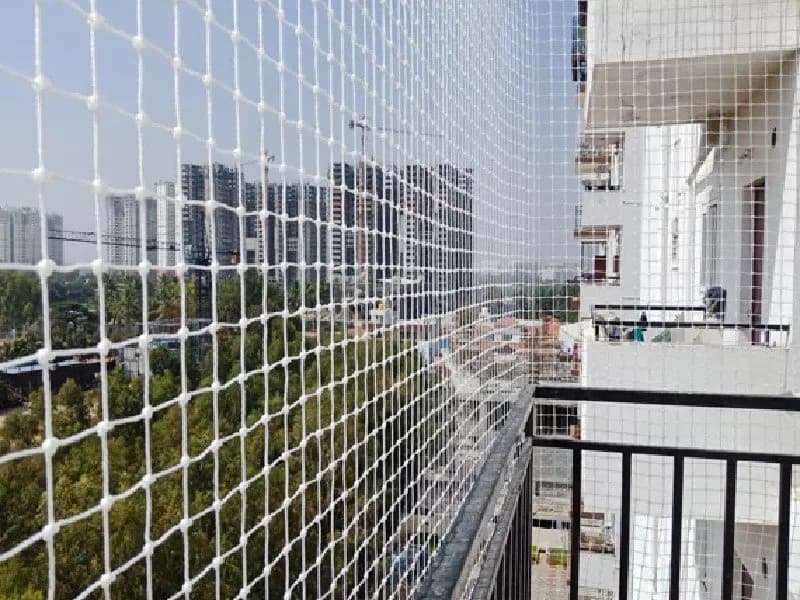
Choosing bird safety netting in Chennai is very different from selecting nets in inland cities like Bengaluru or Hyderabad. Chennai's coastal environment combines intense UV solar radiation with high relative humidity and salt-laden sea air from the Bay of Bengal.
If you install low-grade netting on your balcony, UV rays break down the polymer chains, causing the mesh to turn brittle, snap, and sag within months. In this guide, we compare HDPE vs. Nylon pigeon nets to help you select the ideal mesh for Chennai's weather.
The Hidden Impact of Chennai's Coastal Climate on Safety Nets
Weather Stressors on Outdoor Netting:
- High Solar UV Index: Direct sunlight degrades non-UV-stabilized plastics rapidly.
- Saline Atmospheric Air: Coastal humidity accelerates chemical breakdown in untreated nylon.
- Cyclonic Wind Gusts: Northeast monsoon winds apply immense pressure on balcony perimeter frames.
High-Density Polyethylene (HDPE) Nets: Pros & Cons
HDPE is a thermoplastic polymer made from petroleum. High-grade HDPE safety nets (such as Garware netting) are melt-blended with UV inhibitors during manufacturing.
- Zero Water Absorption: Does not rot, swell, or retain water during heavy rains.
- Superior Heat & UV Resistance: Withstands temperatures up to 80°C without softening.
- Long Lifespan: Lasts 5 to 8+ years under direct sun in Chennai.
- High Tensile Strength: Knotless construction distributes load evenly. Explore anti-bird nets for balconies.
Monofilament Nylon Nets: Pros & Cons
Nylon nets are made from transparent single-strand monofilament. While they offer high aesthetic transparency, they have notable limitations in coastal climates:
- High Transparency: Nearly invisible from a short distance.
- Lower Upfront Cost: Cheaper initial purchase price per sq. ft.
- UV Degradation Risk: Tends to turn yellow, brittle, and snap after 18 to 24 months of exposure to harsh sun.
Head-to-Head Comparison: HDPE vs. Nylon
| Feature | HDPE Netting (Garware) | Monofilament Nylon Net |
|---|---|---|
| UV Resistance | Excellent (Built-in UV Inhibitors) | Moderate to Poor |
| Coastal Salt Tolerance | 100% Salt Proof | Degrades over time |
| Expected Lifespan in Chennai | 5 – 8+ Years | 1.5 – 3 Years |
| Cost & Long-Term Value | High Long-Term Value (Best ROI over 5–8 Years) | Lower Initial Cost (Requires Frequent Replacement) |
Expert Verdict for Chennai Homeowners
For balconies, utility spaces, and duct areas in Chennai, UV-stabilized HDPE netting is overwhelmingly the better investment. The slight extra upfront cost pays for itself through 5+ years of worry-free protection.
For specialized high-rise protection, check out our bird protection nets or contact us via our Contact Page.
Frequently Asked Questions (FAQs)
Does saline sea air in Chennai ruin nylon or HDPE nets?
Untreated nylon absorbs moisture and atmospheric salt, causing it to weaken and turn brittle within 18 months. UV-treated HDPE polymer is impervious to water and salt corrosion.
Which net brand is considered the best in India for pigeon control?
Garware High-Density Polyethylene (HDPE) UV-treated nets are widely recognized as the industry standard in India for durability and strength. Learn about pigeon safety nets →

Poorna Safety Nets Expert Team
Materials & Quality Assurance Technicians
Specializing in bird control, balcony safety netting, and invisible grill installations across Chennai since 2015.
Related Safety Articles
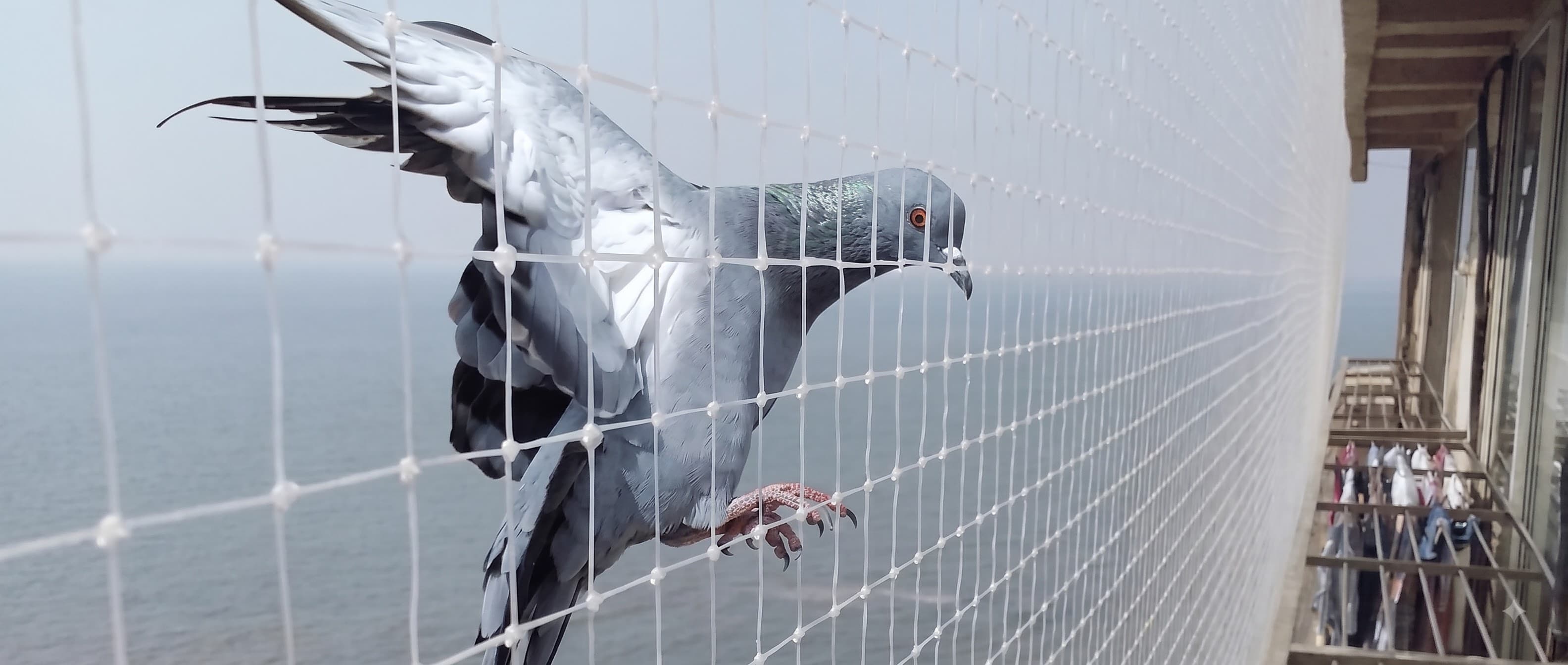
Kabutar Net Near Me in Chennai: The Complete Guide to Pigeon Net for Balcony Price, Cost Per Square Feet & Installation
Read Article →